Friday, February 24, 2012

Lettuce, pray?

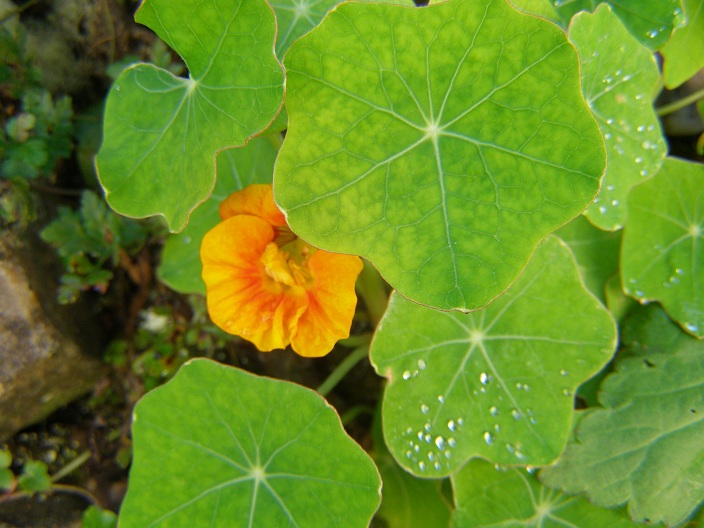
It's lettuce. But look closer:
how many kinds can you spot?
A lettuce is a lettuce is a lettuce, right?
Well – not exactly.

As I was drawing up my (still lengthening) shopping list for VP's 52-week salad challenge – three lettuce varieties sown, about 33 to go – I began to realise that there is a whole lettucey world out there of which I know very little.

My VP-powered list began sprouting ever more names: Batavian, Butterhead, Romaine...

I'm familiar, in a woolly sort of way, with some of these through buying them in the shops, and as it turns out I've grown most types at one time or another, without taking much notice of what they were or what they did. But that's about it.

So I went and did a bit of digging around to see if I could find out what's out there. Here's what I came up with:

Batavian (Black Seeded Simpson, Lettony, Rouge Grenobloise)

The British Leafy Salad Association website (don't get excited: it is, how can I put it, not designed for gardeners) describes this as 'non-hearty' – I beg to disagree, as when I grew Black-seeded Simpson last year, thinking it was a loose-leaf, I was a little disconcerted when it did in fact form a heart. A very loose one, it's true, but undeniably hearty.

Anyway, Batavian lettuces are known for their thick, crinkled leaves, crisp texture and exceptional flavour – usually described as nutty, and I found it quite savoury in comparison to other lettuces. It's very complex, very interesting, and quite unlike any other lettuce I've ever eaten. Oh, and they're enormous, stand well after maturing, and stay fresh for ages.

Iceberg (Webb's Wonderful, Chancellor, Reine de Glace)

Also known as crisphead; also known as the wateriest, most tasteless lettuce you'll ever eat.

Iceberg was terribly trendy in the 1970s, but that was when we knew nothing about food. Part of its success was its ability to keep, making it a supermarket buyer's darling. Flavour, shmavour.

It comes as something of a surprise to realise that Iceberg was bred from Batavian lettuces. Didn't inherit the flavour gene, then. But: Joy Larkcom says the red-tinted ones are tastier: the only one I could find was 'Red Iceberg', offered by Real Seeds, so maybe that's one to try.

'Salad Bowl' frothing at the
feet of my peas last year
Loose-leaf (Catalogna, Salad Bowl, Oakleaf, Lollo Rossa)

The lettuce type I almost always grow, as it's easy and keeps going for ages and ages. They don't form hearts, simply continuing to produce leaves from a loose centre which you can pick, either taking off the outer leaves whole, or snipping the whole thing off with scissors about 5cm above ground (leaving enough to preserve the growing point intact).

Monty Don rather surprised me by writing he thought Lollo Rossa 'runs Iceberg hard for tastelessness'. That's not been my experience. The flavour is fine – perhaps not the greatest of them all, but good – and the texture excellent. And it looks fantastic. But my desert-island loose-leaf is Salad Bowl; pretty, in zingy lime green, and very tolerant of nearly every type of neglect I throw at it, it's beautifully crisp, with a light, refreshing flavour.

I also adore the deeply-lobed oakleaf types – Salad Bowl is similar in leaf shape but the one I covet is bronze-tipped. I think it may be Bronze Arrowhead and I must track it down and grow it: they are quite the most beautiful things.

Butterhead (Merveille de Quat' Saisons, Tom Thumb, Valdor)

Another one with other names: cabbage-head, round-head, or those flaccid lettuces we all ate before Iceberg came along and seemed the answer to all our woes (little did we know what a world of flavour was just around the corner).

The only one I've grown is Tom Thumb, which is just the cutest little lettuce you ever did see. It's only about 3” across, tightly hearted and ready in next to no time, and you can serve a whole lettuce as a side salad, with room for the trimmings. This month I also sowed Merveille which is red-tinted: I've coveted this one for a while.

All have tightly-packed hearts with flattish tops – rather like a cabbage – and are soft in texture, so eat straight after picking or they'll wilt (as we all know from the shop-bought variety: this has to be one of the veg most profoundly transformed by growing at home).

Romaine and Cos (Freckles, Deer Tongue, Lobjoit's Green Cos, Little Gem)

Well – who'd have thought it. Romaine and cos are the same thing. I always had them down as something different: and I'm sure I've seen both of them for sale side by side.

Apparently 'cos' is a British name: we called it after the Greek island it arrived from (via North Africa). Romaine is used in France and the US: it just means 'Roman', which is as far back as it's been cultivated. Joy Larkcom adds the category 'semi-cos', which as far as I can see means the smaller varieties like Little Gem.

They all share that torpedo-like upright shape, a slowness to mature, and an outstanding flavour, much praised by gardeners in the know. Monty Don swears by Lobjoit's; I grew Freckles last year, and... well, it was nice enough, and pretty, but I wasn't jumping up and down about it.

I'm probably just not growing the right one. I really fancy Amish Deer Tongue (also Red Deer Tongue); a big bruiser of an American lettuce which looks just gorgeous. And I suppose I'll have to give Lobjoit's a go: Joy Larkcom likes it too. Whatever you grow, pick it the moment it's ready: once a cos lettuce reaches maturity it'll bolt as soon as look at you.

Wednesday, February 22, 2012

Wordless Wednesday: Wisley butterflies


(you can still see these for yourself: Butterflies in the Glasshouse at RHS Wisley, Surrey, continues until 26 February)

Monday, February 20, 2012

Garden words: The February Review

The Morville Hours
by Katherine Swift

This beautiful, heartfelt, classic work of garden writing is poised just at the point where the muddy business of gardening becomes something more spiritual and meaningful. It captures perfectly that elusive depth of feeling we all experience when we've got our hands in the soil. It is the kind of book I would like, one day, to aspire to when I write the story of my own garden.

It's essentially a love letter from Katherine Swift to her 1.5 acre garden at the Dower House at Morville Hall, an Elizabethan manor house owned by the National Trust in Shropshire.

Katherine – a garden historian – designed the garden to tell the history of British gardening through a series of rooms, each designed in a particular historical style. It's open to the public, so you can go see for yourself.

The book, published in 2008, tells the story of the making of this garden, from the moment Katherine first arrived there – somewhat unwillingly, since she describes the garden as her husband's 'plan to lure me home', with great reluctance, from Dublin where she was then working looking after Trinity College's collection of rare and ancient books.

But what lifts this book above just another story of how a garden was made is the fact that – like so many of the best gardeners – Katherine is a dreamer, and an uncurable romantic. Just take this paragraph, from the first page of the book.

'I came here to make a garden. In the red earth I find fragments of blue-and-white willow-pattern china, white marble floor-tiles, rusted iron nails. A litter of broken clay pipes in the flower-beds, their air holes stopped with soil. Opaque slivers of medieval glass, blue as snowmelt. Flat wedges of earthenware dishes with notched rims and looping patterns of cream and brown. Who drank from that cup, who smoked that pipe, who looked through that window? Did they stand as I stand now, watching the clouds on the hillside?'

It is beautiful writing: and she has a knack of making you see things in a new light. I've never looked at the junk I've pulled out of my garden in quite the same way since reading that paragraph: last week I dug up an old iron hook, hand-forged and rusted but still strong as an ox, and have been wondering about the Somerset blacksmith who made it – and the farmer who left it there - ever since.

She's also a wonderfully inspiring historian, seamlessly weaving historical facts and stories from hundreds of years ago with mysteries and ancient lore through the text, meandering down sidetracks every few sentences until you've forgotten where it was you started. The book itself is modelled on the Book of Hours: a guide for mediaeval monks laying out the seven Day Hours and Vigils, the Night Office (aka Matins): a strict code to follow, but within which she finds plenty of room to wander well off the beaten track.

This means that one minute she's talking about thawing the garden stopcocks, the next she's wondering whether a figurine in the local museum – thought to be a votive offering to a natural spring and found at nearby Wenlock Priory - is a Gaulish sacred relic or a Romanesque carving. And that leads on to a short history of milling and the Industrial Revolution in Shropshire: for a book about a garden, this is one with the widest possible remit.

A deep feeling of place pervades the text and you fall in love with Much Wenlock and the Shropshire Hills along with the author as she delves further into its people and its history.

It's also full of delightful vignettes: take Lady L (for Labouchere), nearly 80 and in failing health.

'There was lunch at one and tea at four, hot-cross buns at Easter and steam whistles from across the park on Bank Holiday weekends – the sound of the Severn Valley Railway on the other side of the river. The big old sitting-room was piled with books, papers, letters, photographs, Country Lifes and Christie's sale catalogues, half-finished embroideries and just-begun watercolours.'

She goes on to mention that Lady L is related to the pioneer women photographers Lady Charlotte and Lady Lucy Bridgeman, known to their descendants as 'the burnt aunts' because they died together in 1858 when their crinolines caught fire.

It's a finely-observed, sharply intelligent, sensitive book, quite unlike any other I've read. Apparently there's a successor now: after The Morville Hours was serialised on Radio 4, people woke up to the fact that Katherine had been quietly contributing gardening columns for The Times for four years. 'The Morville Year' is a collection of those columns, published this time last year. She's also currently working on a third book. But this is the one they'll all have to measure up to: and I can't think they'll find that easy at all.

Tuesday, February 14, 2012

The seeds of change

A humble potato day in a little village hall in the middle of nowhere (pace the residents of Castle Cary) in Somerset might seem an unlikely setting for the beginnings of a revolution.

But as I walked around picking out this year's little bundles of treasure, it occurred to me that everybody in that room was uncomplicatedly and happily going about the task of undermining the establishment – those people who tell you what you can and can't grow, what varieties of potato you're 'allowed' to buy.

They were doing so with a smile on their faces: peacefully, yet astonishingly effectively. You could see it from the sparkles in their eyes, the excitement as they dithered over 'Mr Little's Yetholm Gypsy' or 'Vitelotte' and riffled through the paper seed packets or scooped up a generous mugful of shallot sets. It was the excitement of the person who knows they're in on something – and that it's really, really good.

Of course, it's partly just the joy of gardening: there are few occupations which bring on outbreaks of unadulterated cheeriness in quite the same way.

But I think there's something else going on here. You see, I've seen those expressions before, at seed swaps, on the face of the lady I spoke to about Transition Town Totnes, in the eyes of the rapt audience watching a beekeeper go about his work at an allotment open day in Brighton.

Quiet revolutionaries?
It's a quiet revolution: one where people just get on with it. They don't march on Westminster: they don't even particularly want to take on the world. I'm not sure they even realise they're revolting.

But what they're doing is, undeniably, sticking two fingers up at the status quo, at the vested interests, at the government diktats: rejecting all that, and going their own way.

So far it's also a minority, though a growing one. It's noticeably middle-class in its concerns and interests, but I don't see why that makes it any less valid. I find its various manifestations incredibly inspiring, well beyond the initial rather woolly and slightly irrelevant impression they might give at first.

In fact, they couldn't be more relevant. They give me hope for the future.

Here's how you, too, can join the revolution:

Potato Days (Jan-March): now happening at a village hall near you. A wonderful opportunity to join other like-minded people in rifling through tubers with unlikely names, eat a great deal of cake and – if you go to one of the larger ones – find out a fair bit about local heritage and gardening. I have no idea how it works to cement a community: but it does.

It is - like all the best revolutions - fuelled on
copious quantities of cake
Seedy Sundays (mostly February): more openly alternative: you're as likely to come across a local renewable energy cooperative or someone trying to persuade you that building houses out of tyres is the next big thing (actually, it is kind of cool). And the overall concept is definitely more 'hippy' – you bring a few seeds you've saved from home, you take home as many as you want in return, nobody's counting, nobody's watching, they just trust you to join in the spirit of the thing. But because it's based on trust, it works: and it restores your faith in human nature, which is surely what community is all about.

National Beanpole Week (April): if forests (or at least, woodlands) are your thing, you can get down with the woodsmen at coppicing events around the country. Those who manage the coppiced woodlands in our countryside are often a hidden community: this is the week they come out of the woods and join in with everyone else. Events are community affairs, with demonstrations of traditional crafts, and an encouragement for gardeners to use more locally-sourced, sustainable coppicing products in what they do.

National Allotment Week (August): find out what your local allotments are doing and get to know what a strong community you can forge by just exchanging tips over the plot fence. Many are much more than just a load of people growing veg: Moulsecoomb, in Brighton, have started a forest garden which provides gardening therapy to some of the most disadvantaged kids in the area. They keep bees, too.

and if you're serious about your revolutionary tendencies:

Community Supported Agriculture: farms run cooperatively by local communities. Now embraced by the National Trust, until recently firmly establishment but becoming more and more revolutionary by the day. They're running four CSA farms, notably the MyFarm setup at their Wimpole Estate in Cambridgeshire - so democratic that members vote on what to grow and how to raise the animals.

The Transition Town movement is sweeping the country, having migrated here, like the CSA movement, from across the Atlantic. The most established is Totnes, not a million miles from here (where they grow lettuces for amenity planting) and it's spreading to dozens of towns from Brighton to Melrose in the Scottish Borders.

It covers so much more than gardening, although growing things is the fuel behind the whole scheme: the thinking is that the entire town becomes self-sufficient, disengaging itself from globalisation and the wider nation and producing its own food, its own energy, its own support systems. It therefore - the thinking is - becomes more resilient, less at the mercy of a whim-led government.

If you follow that to its logical conclusion, soon we won't need governments at all. Now there's a revolutionary thought: it might just be that the seeds of change are to be found in our gardens.

Thursday, February 09, 2012

When is a meadow not a meadow?

Not a meadow
Does it matter what we call things?

This was the question posed by Miles King, well-respected Conservation Director of the Grasslands Trust – an increasingly vociferous and effective pressure group, campaigning to reverse the destruction of the nation's grasslands and meadows.

Now, that's ancient, traditional meadows, I should clarify – what Miles King capitalises as Wildflower Meadows.

What with 2012's RHS Britain in Bloom going 'wild about wildflowers' (that's arable cornfield flowers, not meadows), and the Olympics planting Fields of Gold (that's annual seed mixes, not meadows) and the advent of MeadowMats (that's wildflowers used as shed roofing: does that count?) and the people who manage Hyde Park letting the grass grow long to encourage wildflowers (ah - now we're getting there, surely?): there has never been a time when meadows have been more in the public eye, yet more annoyingly woolly in definition to the purist.

This isn't one either: the Fields of Gold
at the Olympic Park
In his blog, Miles takes particular issue with the highly successful Pictorial Meadows: annual seed mixes invented by Professor Nigel Dunnett, urban horticulture specialist, RHS Chelsea Flower Show regular and urban renewal pioneer, of the University of Sheffield's Department of Landscape.

Pictorial meadows are transforming urban spaces cheaply and effectively: they are introducing many people who have never had much to do with nature, or the countryside, to the joys of getting up close with beauty, and teeming insect life, and the pleasures of feeling things growing under your feet.

I've planted them in my own garden: they are breathtakingly beautiful, full of wildlife, and one of the best things I've ever done. I should add – just for balance – that I'm currently also taking care of 1/3 acre of rare traditional chalk downland meadow, the top third of my garden, and that's beautiful, full of wildlife and one of the best things I've ever done, too.

Read the post for Miles's full argument, but it basically boils down to the fact that by calling themselves meadows at all, Pictorial Meadows are distracting people's attention from ancient traditional meadows – of which there are precious few left - confusing the issue, and therefore undermining Miles's attempts to save our traditional grasslands. To quote: 'pictorial meadows are not contributing to the conservation of Wildflower Meadows or their wildlife (and other values). And for that reason it does matter what we call things.'

I happen to know, from regular conversations with him over the past few years, that Nigel is someone who thinks particularly deeply about our wider environment and the role plants have to play.

So when a Twitter discussion erupted last week – mainly in support of Miles's position – I couldn't help thinking Nigel's voice was missing from the debate. I was curious to know his take on the subject, so I got in touch and asked him. I felt his answer deserves quoting at length.

So what about this? MeadowMat growing at the nursery
He told me a story from the very early days, when he was just beginning to work with annual seed mixtures. Gloucester Council asked him to vegetate a central reservation on a dual carriageway: roadworks and tree planting had ripped up existing grass and shrubs, and all that was left was 'mown grass and tired landscape shrubs'.

Nigel made them an annual mix which flowered from June to November, a blaze of yellow and orange through into the autumn.

“I was contacted by a representative from English Nature,” he says. “She said this should never have been done.

“Her issue was that by making it look so easy to make these 'wildflower landscapes', we were giving the go-ahead to farmers to destroy meadows in the countryside because they would think that they could be made again in cities. And because these weren't proper wildflower meadows, that was a very bad thing.”

Nigel asked her whether she would have preferred the central reservation to remain mown grass and variegated shrubs: to which her answer was 'yes'.

'I was staggered by this,' says Nigel,' because this was a nature conservationist saying that she would rather have areas offering very little wildlife value, and extremely monotonous in a visual sense, instead of these flower, nectar and pollen-rich landscapes.

'By implication, her purist approach would both deny people a beautiful experience, and also eliminate a potential wildlife haven. People like this are dangerous in my opinion.'

This is: wildflowers in the south west
(courtesy of the RSPB via www.oursouthwest.com)
He points out that research has shown that far from non-natives having little wildlife value, the opposite is true. He says the general consensus now is that diverse flowering meadows and gardens are highly valuable to invertebrates, regardless of where the plants come from.

'What I am doing is working, and it is highly successful,' he says. 'It is bringing flower-rich landscapes into the heart of the city, into the everyday landscape. This isn't the nature reserve approach, where people are kept away from valuable sites and only those in the know can visit them, or make the choice to travel to them.

'What we are doing is making meadows in places where people have no choice but to walk through them, live with them, look out on to them. And therefore they do have to have a different character.'

His final point struck a particular chord for me: I dislike the entirely unnecessary polarisation of gardener and nature conservationist almost as much as I do the whole gardener vs designer dichotomy. Though it may be in a different key, we're all, surely, marching to the same tune.

'People like to see things in such simple black and white terms – things are either one thing or the other: it's either a meadow or it isn't.

'To me, life isn't so simple. Things are in shades of grey. So there is a whole continuum of meadow types, ranging from flower-rich and annual, through to grassy, perennial and with little flower.

'The key thing to me is that the pictorial meadow type approach, whether annual or perennial, opens the doors, or the floodgates to the much wider use of the native wildflower meadow because it makes meadow landscapes far more acceptable and part of the norm, and enables them to be used in high profile, high intensity places that would formerly be preserved for intensive horticulture.

“The use of the word meadow is deliberate. People can identify with it, and it makes sense. Of course it isn't a meadow in the purest sense, but then the same applies for countless other things that I can think of that are popular and well-liked.

'I would suggest the argument in [Miles King's] blog is entirely misplaced and focussed on the wrong thing. Rather than attacking a concept that is really entirely positive and is bringing huge benefits for urban biodiversity compared with what was there before, I suggest that the real fire should be on the rural landscape and the covering of thousands and thousands of hectares with monocultural crops with minimal habitat value.

“Compared to this, the concern over the naming of a few tens of hectares of flower-rich landscapes is rather trivial.”

**stop press** Miles King's response to this post is included among the comments below

Monday, February 06, 2012

Gardening trends for 2012

Far be it for me to set myself up as a gardening soothsayer: about all you can say about the coming year with any sort of certainty, let's face it, is that the weather will be occasionally surprising and not at all 'normal', someone somewhere will be killing a slug, and Laurence Llewellyn-Bowen will be at Press Day at Chelsea.

But since I'm not one to shy away from sticking my head above the parapet, quite frequently getting it rapped sharply by assorted arrows in the process, I thought I'd make a few predictions.

Fresh from the Garden Press Event last week, in which all things new in the world of horticulture were dangled enticingly before the garden press to distract them away from their coffee and the fencing (and I don't mean the garden variety: it's a long story) in order to convince them that this - yes, this - is the next Big Thing.

Of course only a few will fulfil such promise, and part of the fun is trying to spot which those might be. Here are the top trends I think we'll be hearing more of over the next year.

Gardening gone digital: The power of the web is being harnessed in ever-more-sophisticated ways: definitely a trend on the up.

Garden design tools, for example, are moving steadily from the clunky to the cool: Plantify is the new kid on the block with its new online design tool launching at the end of March.

It's the latest in a long line of increasingly good online design tools accessible to ordinary gardeners, yet offering a satisfyingly high standard of graphics and at the same time being properly useful. A personal favourite is the ever-wonderful GrowVeg.com, which helps me work out what I'm growing in my veg patch each year.

There's one innovation Plantify has which raises it above the mildly irritating and increasingly old-fashioned offering from the BBC (not enough plants, not enough detail, not enough anything, really) and the product-centred Garden Visualiser from Marshalls.

And that's the frankly inspirational idea that you can use Google Earth to produce a to-scale outline of your garden. I have been, I'll confess, terrified to the point of paralysis about trying to measure my former quarry with its near-vertical banks and countryside-wonky edges. But Plantify did it within minutes (including the position of a couple of established trees).

There's more: the intention is that once you've decided what you want to plant, it'll be automatically costed using current nursery price lists, and then if you want to go ahead and buy, however many nurseries your purchases are scattered across, Plantify gathers them all in one place and delivers the plants to your front door. Now - if it works - that's impressive: and surely a sign of things to come.

The return of 'new' old veg varieties: Eat your heart out, heritage varieties and exotica: nostalgia veg are the next big thing. Spotted on my rounds (and in some cases, snapped up for growing chez moi): samphire, asparagus pea, and Scorzonera 'Duplex'.

All vegetables grown hundreds of years ago (or in the case of samphire, gathered from the seashores as a delicacy to use with fish): and now, after a spell in the doldrums, being rediscovered. Others to return to favour lately include cardoons, seakale, strawberry spinach, and salsify.

Renewables-powered gardening: there are wind-powered and solar-powered garden lighting systems already on the market. Solar also powers fountains (if somewhat erratically, I'm told, from those who have them); and an innovative company in Cambridge has even invented a greenhouse with solar glass which generates enough power to heat itself and to spare.

And now there's solar-powered irrigation, here to solve that ages-old problem of lugging watering cans back and forth when you don't have any mains water available. The only potential drawback I can see with Irrigatia's new system is that you'd have to keep your water butt topped up somehow: but as long as you can get around that, your allotment watering is sorted.

Meadows: I am stewing up a little bloglette on the wider subject of meadows, so I'll restrict myself to saying that this a Jolly Interesting Subject which I suspect may well be one of the debating topics of the gardening year this year.

So more of this later: but I just wanted to point out that you can now buy meadows on a mat. Discuss.

Peat-free innovations: Spurred on by the government's impending (though voluntary) phase-out of peat in gardening composts by 2020, peat producers are - at last - expanding their range of peat-free growing media.

It's long been a bugbear of mine that I can't get hold of a good peat-free seed compost. I am very nearly entirely peat-free, and have pretty much always been (one of the few areas in which I turned out to be an early adopter - but I won't bore you with all that). But the very nearly comes in because I use John Innes seed compost, which is soil-based but also peat-based.

That's mainly because I haven't been able to find anything better. I've been thinking about sieving my New Horizon but can't quite bring myself to risk a trial sowing.

Now I discover Sinclair's, who extract vast amounts of peat but are also in a Jekyll and Hyde sort of way the country's leading producer of peat-free and manufacture New Horizon, do a peat-free sowing compost.

I had a long conversation with the nice lady on their stand and even she admitted that it's in its early stages; knowing how long it took them to get peat-free reliably right, I suspect we may have a little way to go before it's threatening my consumption of John Innes.

But I plan to hunt some down (it's not available in any of my local garden centres - another area where there might be some room for improvement): perhaps I'll even be brave and do some trialling with some sacrificial seedlings. I will be reporting back.

The hammock is dead. Long live the swing seat: not exactly new, but more of a growing trend emerging from the last few years and showing no signs of going away.

The swoon-inducingly gorgeous hanging seats designed by Stephen Myburgh have led the way in what amounts to the usurping of the hammock by nest-like cocoons hanging from free-standing frames (or occasionally from the ceiling or a handy - though presumably sturdy - pergola).

There's now a cheaper and more hammock-like version too; the Cacoon, inspired by and I think made out of sails. Even John Lewis have 'pod chairs', for goodness' sake. Roll over, hammocks: your days are done.

Tuesday, January 31, 2012

End of month view: January

So here we are then, at the turn of another year; and so I took a look back at what things were like this time last year (one of the many benefits of following the End of Month View meme kindly hosted by Helen at The Patient Gardener).

This may become an annual event: I see that last year, the first time I did this, I was also comparing and contrasting, though on that occasion I was monitoring change over a mere three or four months; this time it's a whole year's worth.

I had thought I'd hardly achieved anything during the year - the frustration of competing and always, it seems, more urgent claims from small children, animals, work and the running of a somewhat chaotic household.

But from comparing these photos I discover things have actually, in some bits of the garden at least, changed quite a lot.

They say the longest journeys start with a single step. Perhaps I should just stop beating myself up about how little progress I've made towards the dream garden in my head; and start celebrating the fact that I've made any progress at all. Because as long as you make just a little progress every day, before you know it you've changed your little corner of the world more than you ever thought possible.

And besides, just think what I could achieve by January 2013!

The Vegetable Garden:

This time last year it looked like this...

And now....


Actually I'm rather regretting having taken this picture so far back: the shot I took last year is taken standing just behind the far tree in this picture. I cannot believe that just a year ago I was looking at bare ground here.

In just a single year I have dug over all that scrubby-looking grass and turned it into an incredibly productive vegetable patch that has fed my family almost completely: I have only had to start buying veg from the shops this month for the first time since last March, and that's only because I didn't get around to planting my kale out early enough.

The patch of black-polythene-covered veg patch you can see in the distance (the whole of the 2011 picture) is about 80ft of veg garden; the grassy bit in the foreground is the bit I'm going to expand into this year, I hope. I've just got a greenhouse to move, then I can start the same old routine of cutting back hedges, putting in rabbit fencing and opening up the ground. Can't wait.

The Fruit Garden:

In 2011:


 ..and now:


Not a lot of change here, then, apart from a lot more grass (and some optimistic scaffold boards). But there is much planning afoot in the background and I'm just about to start work on this bit too: in fact this week should see me cutting back those hedges and covering the grass with black plastic ahead of a serious bit of fruit cage construction and path layout. If you want to know the details: there's more on t'other blog.

The Herb Garden:

in 2011:

and now:


This is one of the areas I've been working really hard on, though there's not anything too spectacular to show for it yet: I find when you're developing gardens that things tend to get a whole lot worse before they start looking better.

This rocky bed is slowly being transformed into a herb garden, and this year it's been comprehensively cleared. I've dug out two out of the three grandma roses planted incongruously and entirely pointlessly in the middle of the equally pointless lawn at the top of the slope: this lawn also has its days numbered, as in April I'm planning on replacing it with chamomile.

The big hairy fuchsia bush in the top picture is long gone, as are about four large stumps (crowbar and fencer's graft and a lot of sweat) a skip load of Anemone x japonica 'Honorine Jobert' (sounds like vandalism but, believe me, this was invasive beyond the call of duty - and besides, I've kept one small clump at the far end for digging up and moving somewhere it can be better behaved).

So all in all the whole thing looks a great deal tidier, if rather empty at the moment. But I am stewing up the plant order to end all plant orders this spring as I will be packing this space with every kind of herb you can think of: hundreds of them, in the most wonderful planting fest. It's going to make my year.

The Pot-Pourri Garden:

in 2011:


and now:


This is another area that has required an awful lot of clearing before I can do anything with it. I've still only got around halfway around the circle - around as far as that big bush in the background (it's a Philadelphus and I am in a dilemma about it: it looks rather lovely in the summer as it's an 'Aureus' with pretty golden foliage, but appearances are deceptive as it's previously outgrown its welcome at some stage and been hacked down to a stump which has then regrown. It looks very, very ugly at this time of year and I can't help wanting it out: but it's so nice in the summer.... ack. Cannot decide.)

This bit was actually one of the nicest areas of the garden last summer as I filled it with annuals - cosmos, nicotiana and marigolds mostly - so it was exuberant with colour. Now it's filling up with bulbs: I have planted half of my 200 tulips in here, although rather worryingly there's no sign of them yet and I'm fretting about mouse attack. We'll find out in a month or two, I suppose....


The Tropical Garden:

in 2011:


and now:


Still feeling a bit of a fraud (and slightly silly) calling this a tropical garden as it looks anything but tropical in January frosts. But though you can't quite make it out unless you know what you're looking at, there's a small loquat tree establishing itself in front of the bank, and a Pawlonia getting its feet down a little further along.

There are also major earthworks going on here: I've dug out the border in front of the path, partly so I could plant the other half of my 200 tulip bulbs and partly so I had somewhere to put all the wonderful things I want to grow here this year. I have gingers and yacon and lots and lots of taro root (that's Colocasia esculenta to you, mate) as well as non-edibles like Geranium maderense and cycads. I'm also going to experiment here with growing large-leaved things that aren't really tropical but look it: so we're talking squashes and courgettes and pumpkins and rhubarb. And maybe some Cavolo Nero kale.

Another area where the plans are racing ahead of the actual work, then....

The Hill:

in 2011:


and now:


The one bit of the garden that's looking, if anything, scruffier than it did last year (though can you see how well the snowdrops have spread? Nothing to do with me, honest guv).

Not so much as a slight shuffle towards the nuttery I hope this will become one day. It's the far end of the garden, so I reckon will probably be the last to get the treatment. In my defence, though, I have been doing a lot of work on the hedge, or rather the hazels perched precariously on top of the vertiginous bank here (as was I, pruning saw in hand, while hacking away at them):


Just to give you an idea of how high this is, my head reaches up to that first patch of leaves on the right.

The grass has carried on growing on the hill right through autumn into early winter thanks to all that warm weather, and it's been so wet we haven't got the mower anywhere near it. So in a sudden flash of inspiration brought on by my dilemma over what to do about my sheep who have run out of grass in the field where they're currently living, I put the two together and have decided that this is going to become a sheep paddock for the next month or two.

Sheep = mobile lawnmowers = job done. Plus I get well-fed sheep and a lot of natural fertiliser too. I may have to fence off those snowdrops though...

Saturday, January 28, 2012

Bagging my salad list

Gone are the days when we were satisfied with a limp lettuce leaf or two plonked on the plate.

Love them or loathe them, bagged supermarket salads have opened our eyes: we now know the delights of a salad full of colour and texture, with not only lettuces but also herbs, and a range of flavours from mild and sweet to spicy, peppery or bitter.

One of the many reasons I leapt at the chance to join VP's 52-week Salad Challenge is that I've never quite managed to organise things so that I have a good mix of salad ingredients to pick at any one time.

The more I thought about it, the more I realised I was looking for my perfect, home-grown supermarket bagged salad. Without the bags, without the chemicals, and without the carbon footprint.

But more than the environmental benefits, I want it to be more interesting than the actual ones you buy from the supermarket; more personalised than the salad seed mixes you can buy from the seed companies. One made just for me.

One problem: deciding what to grow. Well - where better to start compiling a shopping list than the ingredients list on that bag of supermarket salad currently languishing in the drawer at the bottom of the fridge.

At the moment, mine is a standard issue Florette Mixed (I like Florette as it’s one of the few brands which states where the ingredients are sourced – and that’s the UK, and Lincolnshire in particular, all year round, it seems. Why others are so coy about where their salads are from I've no idea. Could it be they're shipping it in from halfway around the world even though we can grow it here?)

Ingredients: Frisée lettuce (we know this as curly endive: it has a pleasantly bitter tang, and needs blanching), iceberg lettuce and radicchio which adds a splash of burgundy to the green. Right: that’s three on this list, although last time I tried to grow iceberg it refused to heart up.

Florette's Crispy adds lambs' lettuce to the list but omits the Iceberg. We buy both, can't remember which I prefer (maybe that should tell me something, though).

From the rest of their range I like the sound of 'Four Leaf Salad': that's Lettuce 'Can Can' (frilly, green, new one on me but widely available), lambs' lettuce, red butterhead (this one from T&M looks really good) and something they refer to as 'red multileaf' – I'm taking that to be a mix of red lettuce such as Lollo Rossa.

Let's try Essential Waitrose mixed salad: green Batavia, Apollo lettuce, red oak leaf and Lollo Rossa. Red oak leaf and Lollo Rossa are old friends and I’ll be glad to give them house room again. Batavia turns out to be another frilly-leaf lettuce type; and I think Apollo is only grown for commercial use as I can’t find it offered to gardeners. It’s a Romaine lettuce – a type I like anyway, so I’ll just have to find a substitute.

So far... so everyday though. I'm not really looking to grow a wide range of lettuces. I'm after something a bit more interesting. I'm after some herbs in my salads. And maybe some peppery zing.

Waitrose baby leaf herb salad mix: very vague about the lettuce content, but adds baby spinach, rocket, flat-leaf parsley and chives (interestingly, the mix states the proportions of salad leaves to herbs: it’s 78% salad leaves to 22% herbs. So a handful of herbs to every four of lettuce-type leaves then).

Other interesting bits from the Waitrose range include their Tenderleaf Salad: lamb's lettuce, pea tops and chard.

I had a hunt through other ranges, most of which we've tried at some point: Sainsbury's Herb Salad is Lollo Rossa, Cos lettuce, rocket, coriander and parsley (again with that 80/20 ratio of lettuce to herbs).

Then there's Steve's Leaves: relatively new in town but with a good and improving environmental policy. Pea Shoots and Baby Leaves is a 40/60 mix of pea shoots, and baby spinach and chard. Other mixes in the range include wasabi (now that should be interesting), and watercress.

But you know what? I think we can do better than all that.

I want to try some heritage lettuces, with their quirky flavours and splashed or ruched leaves. I want to throw in some oriental leaves: mizuna, peppery red mustard, maybe chrysanthemum greens. And oddities like samphire and New Zealand spinach.

I shall report back via these pages. Should be an interesting year!

Monday, January 23, 2012

Watch the birdie

Pinecones (left) and terracotta pot (right)
Happy (cleaned-up) child (centre)
Our annual transmogrification into a nation of twitchers happens this Saturday and Sunday: it's the Big Garden Birdwatch, organised by the RSPB and just getting bigger... and bigger.

In fact, for over 30 years it's been the barometer of change, charting the effect of modern life on our most vulnerable garden friends.

Last year broke all the records again: over 600,000 people took part and spent an hour freezing their... ahem, noses off for an hour (remember the weather?) recording the birds which visited there.

This year, with a bit of luck, it'll all be a bit more balmy and as long as the rain stays off we'll have a much nicer time. I'm busy playing with some ponies on Saturday but am hoping to join in on Sunday.

Our triple-pinecone extravaganza
in all its gloopy glory
Our garden is these days surrounded by proper old-fashioned hedgerows on all sides - five-star habitat for birds - so I'm hoping that we'll be busy (a lot busier than the first time I tried it, anyway - that was a few years ago now but we were living in built-up Surrey suburbia at the time, the frost was thick on the ground and I nearly got hypothermia for the sake of one measly starling).

The RSPB encourages you to tempt the birds into your garden with lots of irresistible bird feed, baths and such like. And this gave me an idea.

I help out from time to time at the local youth club, which involves coming up with activities which the children might enjoy. So last week, we made bird feeders.

This has it all for kids: it's wondrously messy, so simple even the littlies could join in, and dead cheap (we made around 20 bird feeders for all of four quid). So this week, set aside a little time with the small people in your life, suspend your misgivings where grease combined with birdfeed and your kitchen surfaces are concerned, and get stuck in for the best Birdwatch ever.

You will need:
- a block of lard, at room temperature: we found that a third of a one pound block of lard was enough to do each bird feeder
- bird seed: around two 1kg bags did our 20 feeders with some left over
- assorted containers. We used:
  • small logs, no more than 10cm (4") diameter, hollowed out with a Forstener bit (that's a bit of a techie thing which will I hope mean something to blokes: the hubster told me how to spell it and I have absolutely no idea what he was on about)
  • pine cones (opened): ours were rather small, so we tied them into bunches of three, but if you've got larger cones they can be used singly
  • small terracotta plant pots
  • yoghurt pots
- string and scissors
- bowls
- plastic bags
- washing up liquid, for clearing up

1) Take your lard and with your hands, mush it up. This is a child's idea of heaven and an adult's idea of hell. But a messy child is a happy child, so take comfort in that expression of unbridled glee.
2) Tip a handful of birdseed into a bowl, and then mash the lard into it, mixing lard and birdseed well in together in a lovely greasy mushy splodge.
3) Adults, while this is happening, can be tying bits of string to whatever you're going to make the bird feeder out of. We found a few techniques which worked:
  • the logs needed a U-bend staple banged into the top: the 11-year-old boys took to this like ducks to water and at last found a youth club activity they could relate to. Loop the string through and you're done.
  • pine cones: put the pinecone upside down and loop the string around the fat end, weaving it under the open segments wherever possible.
  • terracotta plant pots: just poke the string through the drainage hole and tie in a loop over the top: the pot then hangs on its side (easy for birds to access)
  • yoghurt pots: poke a hole in the bottom (or in the side, if you want it to hang horizontally) and thread the string through. Then get a matchstick and tie the end of the string that's inside the pot around it. When you pull the string tight to hang the bird feeder, the matchstick holds it nicely in place.
4) Fill your bird feeder with the lard-and-birdseed mash. With pinecones, you'll need to work it into the cracks between the open segments: once you've finished it looks like a ball. The holes in the logs worked beautifully, filled to the brim with mush: yoghurt pots and plant pots were simplicity itself to fill. Cram as much in as possible and smooth it off.
5) Place your completed bird feeder on a plastic bag in the fridge for the lard to harden again.
6) Then hang from your chosen tree, get out your RSPB identification chart, sit back and enjoy your annual hour's birdwatching.

Friday, January 20, 2012

The Big Seed Giveaway

Anyone want some seeds?

One of my new resolutions for this year is to get stricter with the number of seeds I sow. No - really. I will.

(At this point, probably best not to mention the fat envelope full of little packets of RHS seeds I found while clearing out which are just so mouthwateringly gorgeous I can't bear to let them go).

The thing is that every March I pull out the old floppy disc* box I use for keeping my seed packets in, and rifle through the section labelled - rather conventionally - 'March'.

This is where I stuff all the packets of seed I acquire during the year, just as somewhere to put them, really. Result: far too many seeds. And I mean far too many: this year I counted around 60 packets I know for sure I will not have time, space or if I'm honest inclination to grow.

No point in keeping all these spare seed packets: but what to do? They're all within date - some with 'sow-by' dates this year but most longer than that - and it seems such a waste just to chuck them out. Nearly all are pristine and unopened: some have lost their outer packets and therefore instructions, but I still know (because I've written it on the inner foil packets) the variety and sow-by date.

My usual fallback is to offload them at a seed swap, but I'm not planning to go to one this year: last year's was great but it was a bit of a hike, being in Wiltshire, and I haven't found one near enough to go to around here (yet). And besides, I've already got quite enough seed to sow to be getting on with for this year and - see resolution above - I really, honestly, truthfully don't need any more.

So I thought I'd just... well... give them away, in my own sort of seed swap without the swap bit.

Therefore, I hereby announce, in its inaugural year of what I suspect may become an annual event...

The CG Big Seed Giveaway for 2012
(rules (not many, I hope) follow the list)

Flowers:
(I'm having to be a bit coy about the exact varieties in some cases, so where I've only listed the name + colour, email me if you want the full details (see below))

Poppy (Papaver laciniatum) (pink) (2 packets available) - both taken
Hollyhock (two-tone mix) - taken
Godetia (pink) - taken
Foxglove (pink)
Foxglove (white with purple dots) - taken
Foxglove (compact, pink) - taken
Calendula (single, yellow)
Coreopsis grandiflora - taken
Antirrhinum dwarf mix
Phlox (mauve mix) - taken
Zinnia (striped mix) - taken
Californian poppy (double, mix) - taken
Salpiglossis (wine-red)
Cornflower (pink & white mix) - taken
Petunia (pink and white mix) - taken
Wildflower mix (for bees) - taken
Gaillardia (butter yellow) - taken

Vegetables:
Courgette (yellow variety) (2 packets available) - both taken
Chilli pepper 'Hot Cayenne' - taken
Chilli pepper (medium hot, red) - taken
Brussels sprout 'Evesham Special' - taken
Carrot (yellow variety) - taken
Carrot (white variety) - taken
Cabbage (green coleslaw type, autumn/winter variety) - taken
Cauliflower 'Aalsmeer' - taken
Tomato 'Moneymaker' - taken
Tomato (patio variety, cherry) - taken
Onion 'Long Red Florence' - taken
Onion 'Ailsa Craig' - taken

Seeds saved by me (NB I am a little erratic on the seed-saving side so viability can't be guaranteed, though it's quite likely: all the following are heritage varieties)

Martock beans (9 packets) - 3 taken
Squash 'Potimarron' (9 packets) - 6 taken
Climbing French bean 'George's' (9 packets) - 4 taken

Opened packets (still with plenty of seed in):
Cabbage 'Ruby Ball' - taken
Beetroot 'Chioggia' - taken
Bronze fennel - taken
Artichoke 'Purple Globe' - taken
Runner beans (no variety given as this was a seed swap acquisition) - taken

How to claim your free seeds:
- comment below giving the names of the seeds you want (if you have any questions about how this works, do just ask. Ditto re more information on any of the named varieties above - most of those named can be found on the interweb if you google)
- then send an email to sally dot nex at btinternet dot com confirming your request
- I'll send you an email back giving you my address
- send an SAE to me and I'll put the seeds in the envelope and post it back to you
- I'll update this post regularly giving details of what's gone and what's left
- the giveaway will last for a week, until 27 January: since this post will go wandering off down the blog, follow me on Twitter (@sallynex) for updates
- if you enjoy growing your seeds, please blog about them later in the year if you can!

Rules:
- no more than 10 packets of seed and no more than one packet of the same variety per person.
- after the week is up, I'll divvy up the remainder between those who have said they want more than 10 packets, so do indicate if you'd like to be part of this.
- first to place their order in the comments below gets the seed
- sorry but the offer is only open to UK respondents, otherwise I'll get clobbered by customs and those nice people who try to stop nasty diseases crossing borders on the backs of foreign seeds

*remember floppy discs? Mine were 3 1/2" and made a whirring noise when you put them in the computer: they seemed the ultimate in hi-techery at the time. The only thing I couldn't quite work out was why they were called floppy when they were so... well... un-floppy. All in all it was quite a relief when CDs and memory sticks came along and relieved me of having to think about it any more.

Wednesday, January 18, 2012

Wordless Wednesday: January rose

(with credit to the hubster, who takes a mean photograph)

Sunday, January 15, 2012

January flowers

And now for probably the most peculiar January Garden Bloggers' Bloom Day post I shall ever write (I hope).

As all British gardeners are acutely aware, this has not been our usual chilly frost-bitten winter in Blighty. Normally we're just about poking around for the first nubs of snowdrops and crocuses edging warily through the earth to see if it's spring yet (it isn't).

We have our greenhouse heaters going at full blast, we have several layers on just to crunch up the drive (trying not to slip embarrassingly onto our backside in the process) the sun hasn't been seen since late October and we're generally a bit on the grumpy side.

We don't - generally speaking, and last year (and the north) excepted - even have any snow to make us feel all this misery has been worth it: it's usually alternating between cold and sodden, cold and frozen, cold and windy and drizzle (cold).

Not so the winter of 2011/12. We've been struggling to fall below double-digit temperatures at night: by day it's positively balmy. My garden is full of snowdrops: the crocuses are edging into flower. The roses and nasturtiums haven't stopped since September: even my Nicotiana mutabilis were still going strong until the first hard frost of the year struck just two days ago, on 13 January. Yes, you read right: the first frost of the year. I have never, ever had it frost-free for so long.

I am rewarded by more blooms in my garden than I have ever had before in January: the winter flowerers are overlapping with the spring flowerers and some of the summer flowerers which have refused to go to bed. Part of me loves it and is revelling in the spectacle, to say nothing of the warmth and the spring-like sunshine. And part of me is filled with dread at the havoc this will play when the true spring begins. Will we even have one, I wonder?

 Valerian (Valeriana officinalis)

 Alpine strawberry 'Baron von Solemacher'

 Snowdrops (Galanthus nivalis)

 Skimmia japonica 'Rubella'

 Rose: one of several we refer to as our 'grandma roses'

 Pelargoniums still flowering in the terracotta pots on the patio

 A host of golden daffodils on the hill

 Even the lawn has daisies already...

 And this hydrangea has forgotten to stop flowering

 Leucojum vernum

 Mahonia x media

 Nasturtiums

Viburnum x bodnantense 'Dawn'

PS by way of a reminder of how very odd all this is: I stumbled across this picture today, taken of our garden almost exactly a year ago.


Thanks go as always to Carol at May Dreams Gardens for hosting Garden Bloggers Bloom Day!
Related Posts with Thumbnails